Thursday, 1 April 2010

Final Poster


Like the posters that I looked at, I have kept the poster simple. The main image is of a silhouetted man adds a sense of mystery, similar in concept to the other posters I examined. The sunset here is to symbolise the 'end' of this man's particular episode. The minimal amount of text helps to keep viewers looking at the image, rather than being distracted by text. Overall, I think that this is quite a unique and professional looking poster.

I have asked many people as to their thoughts about this poster. I did not say this was mine, and said that I was doing this on behalf of a friend, as this removes the observer's paradox (Where the observee changes his/her behaviour based on something that the observer is doing e.g. Speaking in received pronunciation when being recorded with a camera). 

The responses that I got back were mostly positive. Most commented on the image, and how it has a lot of visual impact. 

The negative responses focused on how the image was not actually entirely related to my video or digipak. In response to this criticism, I would posit that many adverts, especially Indie group adverts (like I analysed previously) do not intertwine with videos and/or albums, they are merely exquisite designs which attract attention, which, I believe that my poster does.

Wednesday, 31 March 2010

Making of the Poster

I chose this photo for the poster as it emphasises the title of the song. As the man is silhouetted against the sunset, we cannot see his face, so we don't know who he is. The sunset symbolises the end of this man's relationship with his partner, or that he has realised that it needs to come to an end.


As shown from my flat plans, I have a clear idea of what I want to do. So, I will need to make part of image seperate from the rest. I do this by selecting the rectangular marquee tool, then, in the tool bar, select the style of 'Fixed Aspect Ratio', and select 2 for width and 3 for height. 


Here, I dragged the selection over the part of the image that I want to move to a different layer. Then, I selected 'Layer via cut', which seperates the selection from the layer below. After doing this, I am left with two layers.


Now, I want to darken the background so that Layer 1 sticks out, but not so much that it becomes completely black. To do this, I select the paint Rectangle tool, select the darkest black, select the background layer, fill this in black, then adjust the opacity to a satisfactory level.


After doing that, I need to make a border around the light and darker parts, as it currently looks amateur. To do this, I right click on the layer in the layer selection box, then select 'Blending Options'. In the menu that appears, I select 'Outer Glow', and adjust settings like so:


Since the base of the advert is complete, I now need to add some writing. This involves adding some fonts. So I need to copy the fonts to C:\Windows\Fonts. After adding the Text, I noticed that the space at the bottom was not adequate enough to fit all the details in. Therefore, I re-did all of my steps, except I made the selection shorter but wider, thus allowing me to add the right amount of text in. The final result is:

Tuesday, 30 March 2010

Final Video

As a music video for the Indie genre, I believe that it fits quite nicely with the music. But, in saying that, I think that there are a few minor problems with it.

The first of note would be the potentially confusing story. The characters are introduced in a way which essentially shows no background/history, thus the audience may have a hard time telling what the plot is. This is from feedback from one person, in which they stated that they were confused as to the plot.

Another person stated that they were confused by the ending (where we jump from Westminster bridge to Brighton's west pier) without a fade or story continuation leading up to it. Personally, I think that this is a fair opinion, as I do think that it jumps too quickly between London and Brighton.

But, amongst the constructive criticism, many noted that the composition of the shots, colour (i.e. White balance kept the colours fairly similar) and shallow depth of field created a nice atmosphere, and the use of familiar locations (Westminster bridge & Big Ben were the most notable) allowed them to connect with the video better.

Monday, 29 March 2010

Digipak

This is my final version of my Digipak design.


The top left panel in this image will be where the CD will sit, thus I have decided to use text rather than an image. The bottom right panel is the front cover. I have chosen a sharp, serious image of the main character, as this will immediately make the viewer familiar with the video. The lighting here is particularly good, and giving good definition to the main character's face. The expression of the character emphasises uncertainty, and perhaps could be seen as slightly evil or misguided by the viewer.

The bottom left panel is the back cover, and shows an image of the main character and his partner, with emphasis placed (by adjusting focus) on his partner. The main character is not facing towards his partner, but somewhere out of shot. This, combined with her body language shows how she feels left out and not cared for by her partner. The strong colour of her hair makes the image stand out. I have kept the text minimal to avoid potentially confusing the viewer. It also makes the design 'flow' better.

The top right panel here shows the main character's partner walking in an uncomfortable fashion. I have adjusted the contrast here to portray her as a lonely soul, who is at war with the world. Her dark clothes stand out against a bright background, and her arms folded against her body show that she doesn't feel protected. The tree in the background almost acts as a metaphor of a barrier, with it seperating her from the world.

To improve it, I think i would have done a photoshoot dedicated to this, rather than take images while filming, as this would improve quality, as well as given me more creative choice and positioning. However, I do think that the digipak design does work well.

Friday, 26 March 2010

Distracting elements.

Out of the large quantity of video that we shot, we had to re-do a few scenes due to certain elements which we had not seen prior to filming. The main ones are shown below.

Here we can observe a bright yellow dumpster in the background. This does not fit in with the general colours of the scene. However, it could be argued that it immediately draws your attention to that part of the screen, which is also where the main character appears from.

The element here is less subtle, but, if you look closely at the center part of the screen, you can see a case leaning against the wall, in front of the drainpipe. This is the case for the tripod. Also, it looks out of place.

The distraction here is quite obvious. The 'ghosts' of the windows appear because of reflections caused by the UV filter attached to the front of the lens. Taking it off improved it, but did not completely remove the ghosts.

Friday, 12 March 2010

Poster Analysis


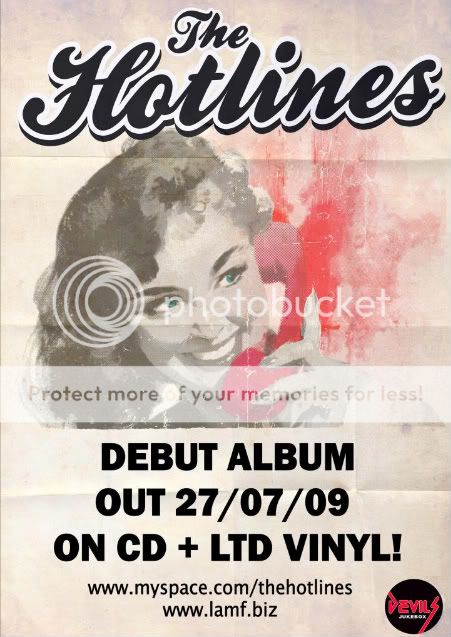
This poster uses a simple minimalist design. The use of colour here is done to emphasise the style of the band (hot pink suggests liveliness and energy). The whole poster gives off a 1950's feel, with the curly font giving it a playful feel. The limited text does not even give the name of the band's debut album, it just states that they have a debut album coming out, which is why web addresses have been provided, as those interested would go onto those websites to learn more.


In a very similar style, this poster uses a simple style to convey information. This poster has a much bolder use of colour, including a similar shade of pink, this does however link to the Album cover. Unlike the previous poster, this one includes the title name of the album, as well as an example of it, thus becomes recognisable. Like the previous poster, it has little detai about the album itself, and provides a website address, where you presumably can learn more about the album & Band.

Friday, 5 March 2010

Camera Controls

Due to the fact that I did not use the video cameras provided, this post is about controlling the video function of my camera.

Unlike video cameras, my camera is designed as a stills camera, with video attached. Therefore, the breadth of controls is much narrower.

The whole mode is automatic, which means that aperture is not selectable. However, it is possible to achieve the same effect via a different method. Since the aperture is electronically controlled, and unlike cinematographic lenses, my lenses do not have aperture dials, It is impossible to change it manually, which would make the aperture problem much easier to cope with.

To change the aperture, I went into the photographic mode, changed the aperture to the one I wanted, then, I pressed on and held the depth of field preview button. Then, by rotating the lens slightly out of position, but still firmly in place, I have the aperture I want, and it cannot be interfered with by the camera itself. This allows for a shallower or deeper depth of field.

The white balance has many options available, including Daylight, Tungsten Lighting, Incandescent lighting and Cloudy. These can all be changed by rotating the click wheel.

Only three video sizes are available. The first is 1080p (1920x1080). This however films at 20 fps, which is under the limit for jerk-free movement. The Hollywood standard is 23.97fps, which gives films their distinctive effect. The second is 720p (1280x720). this runs at the faster frame rate of 30fps. This however doesn't meet standards either, as no system uses exactly 30fps, only 29.97fps. The last size is 480p (640x480). Again, this is 30fps.

It should be worth mentioning that during the time we were filming, canon released an upgraded model of this camera, called the 550D. This featured standard frame rates, a proper frame rate for 1080p recording, manual aperture control and 60fps 480p recording. This would have come in quite handy for our video, but, this would have meant starting it months later, which would put an inordinate amount of pressure on us. Also, recording at 1080p would put a strain on most computers including macs) and I have doubt that it would have been very time efficient to record in that format.

Presentation

As part of our project, we made (and thusly presented it) a presentation in a style similar to the way that a potential video director would present their pitch to the directors of that band's record label.

Tuesday, 12 January 2010

Camera Work - Pull Focus

In cinematography, a 'Pull Focus' is where you shift the focus from one object/subject in the scene to another, to draw attention to that object. To achieve this, you need to be able to manually focus the lens smoothly and have a shallow depth of field (therefore, long focal length or wide aperture). Usually, on full scale productions, there is a special member of the film crew (a 'puller', or first assistant camera) that adjusts focus specifically according to the directors requisition during the on-set rehearsal. Obviously, as a small group, such a setup is not possible, therefore focusing is done by the cameraman (who is in turn the director). An example of focus pulling (Produced by a Canon 500D with 50mm f/1.8 lens attached) is below.


Friday, 27 November 2009

Digipak

A digipak is a style of packaging for DVDs and CDs that utilises a plastic onto card construction. Generally, they open in a book style, in that the cover is attached by the spine, but not any other conventional locking system. A digipak is actually specific to AGI Media, but is used collectively to describe any style casing which resembles the original 'Digipak'. Probably the main reason for using Digipaks over other storage methods is the cost, but you could also argue it's environmental effectiveness has a part to play, and now, 100% recyclable digipaks utilising PET have been made.


I have designed 3 digipaks for this project, one of which will be a final design which will be fully designed, with the representing images.


The top left panel represents the panel on which the plastic disk tray will be sitting. I have chosen to just place credits to audio engineers and those who have contributed to the album (using false names). The top right panel is the inside cover, opposite the disk tray, and have chosen to leave it blank, for aesthetic reasons. The bottom left panel shows a band playing through the screen of a recording studio, which has been tilted to give an effect of chaos. On the bottom right panel, I have emboldened fonts for the band name and single name to give emphasis.


Like the previous design, I have used the top left panel to display text pertaining to the creation of tracks (audio engineers and others). On the top right panel, I have decided to include a Close up of the Male lead character from the video, to give the buyer a 'connection' with the character. The bottom left panel shows the main character and his partner walking away from each other, in a similar style to that in the video for Who's The enemy. The front cover (bottom right panel) shows the main male character sitting upright in his bed illuminated from behind, creating a silhouette, to imply his feelings of non-conformity.


As with all of the other designs, I have used the space where the CD will be placed to display the names of those involved with production (fictional, obviously). The top right panel is to be left blank, as I could not decide on an image that worked with the other two. The bottom left panel shows a similar image to that of the cover of the previous design, however, I have decided to make it the full size of the panel instead, for dramatic effect. The Front cover I have redesigned many times, mainly moving the text around. The design above is not actually representative of what I had envisioned. I would move the Feeder logo above the Males head, and 'Who's the enemy' to below the Female, as a sort of rhetorical question.


Digipak Analysis


Here we can observe a simple layout, with the use of graphics (for example, the logos) with images (technically only one image). I like the use of strong, bold colour, but, I feel that it is a little too repetitive. The two main images on this digipak are essentially the same, minus the slight changes in appearance. Thus it seems very uncreative and therefore unoriginal., especially since it is a six sided digipak.


This is another 6 sided digipak, however, this one is from a band that shares a relatively similar genre. The 'Acoustic' label melds with the guitar on the front, to give you an idea of the content. The creative use of viewpoints in the images shown adds a sense of intrigue, and the simplicity of the design aids this. I think that I would aim to create a digipak more like this than of the Distorture digipak.

Friday, 16 October 2009

Music Video Comparison

Feeder are a band that have rapidly changed their music style throughout their career, diverging from Grungy Hard rock to their softer anthemic style as of late. This was triggered by the suicide of Jon Lee, one of the original members, and good friend to Grant Nicholas. A lot of the music the band produced after his suicide focuses on him. For example, Grant Nicholas wrote the song (and album to which it is named after) 'Quickfade' and dedicated it to Jon, while the album focused on issues such as depression, loss and positivity. Pushing the Senses is described by Grant as an extension to Comfort in Sound, and therefore has the same mix of slow and fast tracks.

Feeder - Feeling A Moment


This music video is one of the sources of inspiration for my music video. The music at the start is actually being played backwards, which is why Grant is seen walking backwards. Which helped me think about the storyline for my music video. I want to make the two characters seem seperated and leading similarly seperate lives. Therefore the introduction emphasises the main character's laziness, as the shot rapidly slows down when he makes his first appearance. I am led to believe that the video itself has been slowed down to around 70%-80% or it's original speed, to allow Grant to walk that slow but keep in fluid motion, as well as the other characters that appear and disappear. This slowness creates an atmosphere which accurately reflects the pace and style of the song.

Grant rarely looks at the camera, and this shows his passive side, two which the main character in my video will also show. It could also show his evasion of others, as well as a general lack of confidence.

I think that I may also use some similar shots, such as when grant walks down the road. But, a lot of the shots used are swooping shots or pans, and to achieve the same stability, I would need a crane or steadicam, and I have access to neither.

Another video which has inspired my thoughts is Keane's 'A Bad dream':


This video uses minimalistic backgrounds, such as continuous black and continuous white, suggesting that it was shot in a studio. I intend to do a similar shot, whereby the main character will be lip-syncing (and avoiding looking at the camera, as mentioned above) in front of a continuous white background, to show his loneliness and how he feels in his current evironment.

Friday, 2 October 2009

Mise-en-scene

Our Music video takes place in a veriety of locations. The first will be a house. The house we have chosen is an attached Victorian 4 storey house. This is ideal as there is a lot of space to work with, and we can use it without causing interruption. The kitchen and a bedroom will be used in the video, as these will be the best places to show the relationship between the couple.

The third location will be London. Since London is a busy place, we can use the crowds of people to show how he feels alienated and different, perhaps also emphasise feelings of claustrophobia or agoraphobia. However, one problem with shooting London is the requirement of permits. Upon doing some research, If you plan to shoot in different parts of London, you will need a permit for each part you intend to shoot in. Since we are filming in one location, this should not be a problem. Also, Small crews/teams of 5 people or less that do not use artificial light or a tripod do not need to apply for a permit, but, if you are told to move on or to stop filming, and do not have a permit, you are legally obliged to do so. But, we do not think that there will be such a problem.

The costumes will be simple and subtle, and casual. However, we may have to use a studio shot, and therefore he will be wearing darker colours, to reflect the sombre side of his personality, and to mimic the sound of the song. Make-up will be kept to a minimum, with the Main characters partner most likely being the only character to receive any amount of make-up.

The use of very vibrant, light colours will be kept to a minimum (at least for scenes with the Main character in). Much like the costume, this is to reflect the atmosphere of the song, as well as the Main characters personality. Though, we may use lighter colours at the start of the video, as the woman is working in the kitchen.

Props will be used sparingly during the video. The main usage of them will be during the kitchen scene, and during the dining room scene. For instance, we can use the brand of cereal to give emphasis to a character's personality, such as weetabix for the main character to emphasise routine and blandness

Friday, 25 September 2009

Introduction

This year, our coursework piece is to create a music video, and some relative materials, such as a DVD cover and a Poster to accompany the music video.

The song that we have chosen to create a music video of is 'Who's the enemy' by Feeder. The song is a departure from Feeder's older roots, and is a slow anthemic song with deeper meaning. The older feeder songs are typically Hard rock, such as 'Choke' and 'bug', whereas the newer Feeder songs are Alternative, more melodic and anthemic. This could be attributed to Jon Lee's suicide, which was a major turning point for the band.

The lyrics are as follows:

'We're running away
Further away 'cause
We won't take this
Losing my way
Knocked to the ground
I lie beside her

You know they're telling us
Nothing's ever gonna change
You know they're telling us
Nothing's ever gonna change

We're running away
Further away so
We might make it

Let's forget
Don't think about it
Let's forget
Let's forget
Don't think about it
We're fighting with ourselves but
Who's The Enemy?

Tear in the sky
Choking the world
That cries before us
It's time to decide
We can't here all
Sit alone in silence

You know they're telling us
Nothing's ever gonna change
You know they're telling us
Nothing's ever gonna change

We're running away
Further away so
We might make it

Let's forget
Don't think about it
Let's forget
Let's forget
Don't think about it

We're fighting with ourselves but
Who's The Enemy?
(Who's The Enemy? (x9))

We're running away
Further away 'cause
We won't take this
Losing our way
Knocked to the ground
But we might make it

Let's forget
Don't think about it
Let's forget
Let's forget
Don't think about it

We're fighting with ourselves but
Who's The Enemy?

Let's forget'


A lot of Feeder's music videos are creative and different in their style compared to other music videos. For instance, Feeder's video for 'Tracing Lines' makes use of multiple cameras and camera angles which have been seamlessly edited together to produce the interesting camera rotations and the appearance of flat, overlapping band members. 'We are the people' takes a different approach. It is a slow song, like 'Who's the enemy', and the video shows the song's deeper meaning. The black and white film style effect gives it depth and isnt just a tacked on effect which has been used just for the sake of it. Shatter isn't as creative. It is based off of the movie 'Nightwatch', and was used as the main song for the movie's trailer in the UK, as well as the song's ending credits. The song most inspiring for me is 'We are the people', as it purveys a deeper meaning, rather than the 'Tracing lines' and 'Shatter', which take a more pop culture approach.

The song starts with a 13 second introduction, which could be used to establish location, or to get some fast cuts of the couple doing things together (walking, talking, watching something etc). Then, as the introduction turns into the first verse, we cut to the couple in bed, at night time, which the man lying up, 'singing' the lyrics. When it cuts to the chorus, we use a sped up clip (the man standing still in one spot, with the crowd moving around him) to contrast with the slowness of the first verse.